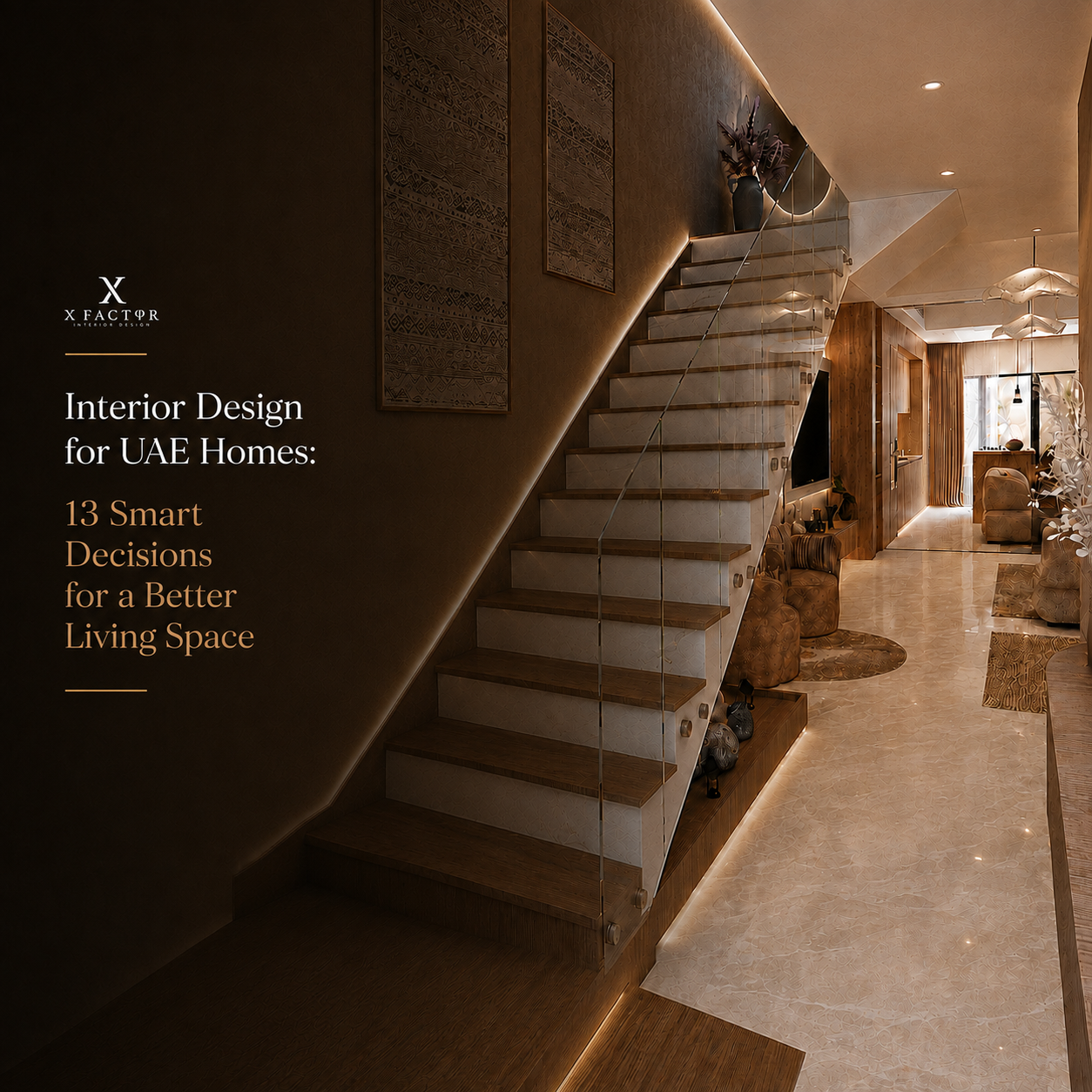
Successful Interior Design for UAE homes is about much more than choosing beautiful furniture, marble, colours, or lighting.
A well-designed home should respond to the people living inside it.
It should consider how you move through the space, how you entertain, what you need to store, where natural light enters, how much privacy you prefer, and which design style genuinely reflects your taste.
At X Factor Designs, we believe the process should start with these questions before moving into decoration.
Because the strongest interiors are not simply beautiful.
They feel right to live in.
Table of Contents
- What Makes Good Interior Design?
- Why Space Planning Comes Before Decoration
- Choosing the Right Interior Design Style
- Modern Interior Design
- Contemporary Interior Design
- Classic Interior Design
- Semi-Classic Interior Design
- Furniture, Circulation and Human Scale
- Lighting, Materials and Atmosphere
- The Importance of 2D and 3D Design
- Why Technical Planning Matters
- Why X Factor Designs Is Different
- Start Your Interior Design Journey
What Makes Good Interior Design?
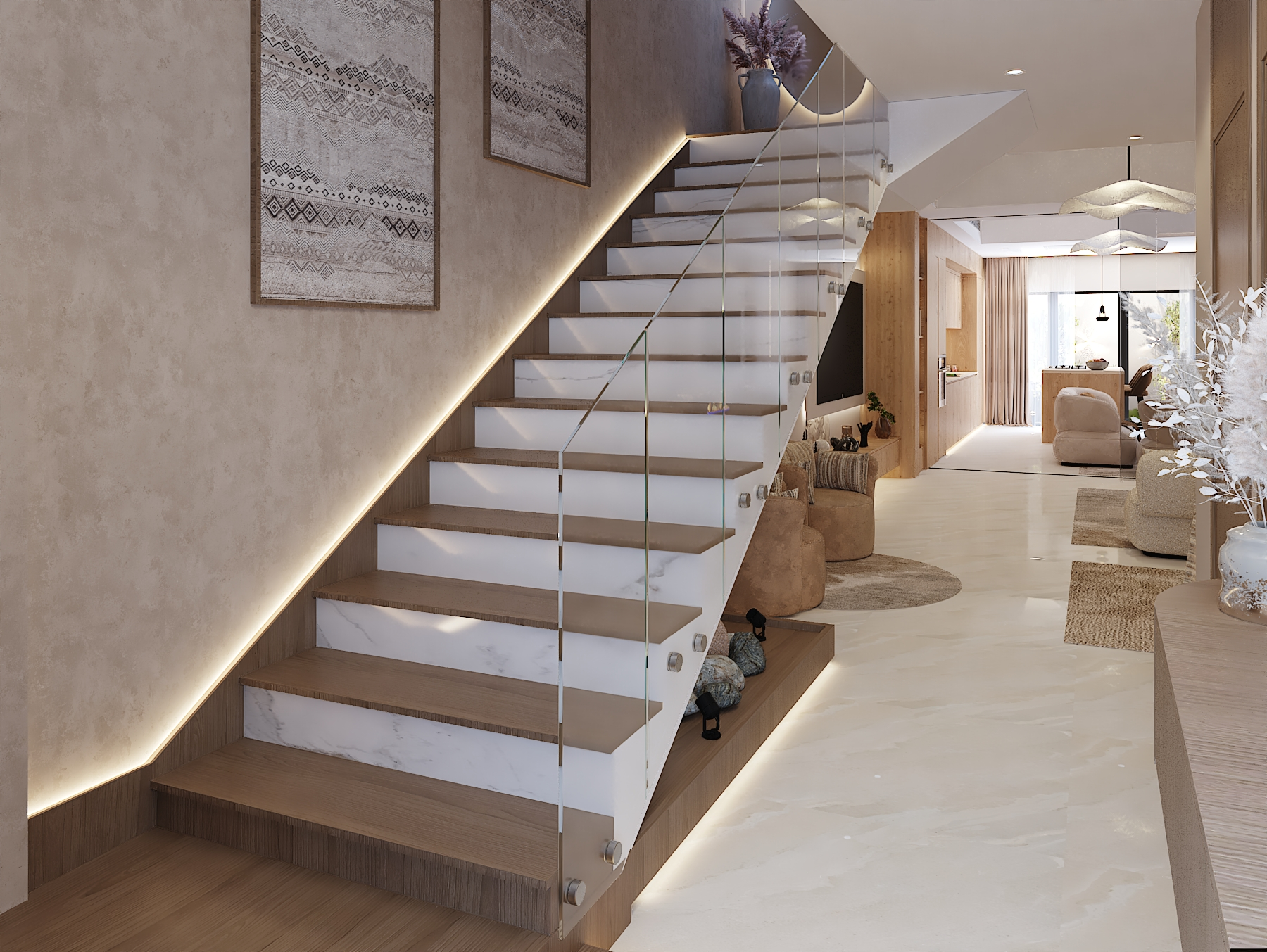
Interior design is the process of creating a space that works visually, functionally, and emotionally.
That includes much more than selecting a style.
A complete design process may consider:
- Space planning
- Furniture layouts
- 2D drawings
- 3D visualisation
- Materials and finishes
- Lighting
- Ceiling design
- Storage
- Joinery
- Colour palettes
- Window treatments
- Furniture selection
- Decorative details
For Interior Design for UAE homes, all these elements need to respond to the architecture of the property and the way the client intends to use it.
The design should feel cohesive from the entrance to the living room, bedrooms, kitchen, and secondary spaces.
Why Space Planning Comes Before Decoration
A beautiful room can still be uncomfortable.
A sofa may look perfect but block an important movement path.
A dining table may technically fit while leaving too little room around the chairs.
A bedroom may accommodate a large bed but create difficulties accessing wardrobes.
That is why space planning should come before finishes and decoration.
At X Factor Designs, we study:
✅ Room proportions
✅ Circulation paths
✅ Furniture placement
✅ Functional zones
✅ Storage requirements
✅ Relationships between different areas
The objective is not simply to fill the floor plan.
It is to create a home that works naturally every day.
Choosing the Right Interior Design Style for Your Home
Modern? Contemporary? Classic? Semi-Classic?
There is no single style that is automatically the best choice.
And the answer should not come from a trend list.
The right style should respond to:
✅ The architecture of your property
✅ Your lifestyle
✅ Your personal taste
✅ The size and proportions of the rooms
✅ Existing furniture or artwork you want to keep
✅ How you want the home to feel over time
One of the most important parts of Interior Design for UAE homes is translating different references and preferences into one clear design direction.
Clients often save inspiration from many different sources. The designer’s role is to understand why the client likes each reference rather than simply copying it.
Modern Interior Design
Modern interiors usually focus on simplicity, clarity, and clean architectural lines.
Typical characteristics include:
✅ Clean forms
✅ Limited decorative detailing
✅ Simple furniture profiles
✅ Natural materials
✅ Neutral or controlled colour palettes
✅ Functional layouts
Modern does not necessarily mean cold or minimal.
Warm woods, textured fabrics, stone, and carefully selected lighting can create a modern home that still feels comfortable and inviting.
This style can work particularly well for homeowners who prefer calm spaces and visual simplicity.
Contemporary Interior Design
Contemporary design is generally more flexible.
While Modern design refers to a more defined design language, Contemporary interiors can respond to current ideas while remaining refined and balanced.
You may see:
✅ Softer furniture shapes
✅ Curved forms
✅ Mixed materials
✅ Layered textures
✅ Statement lighting
✅ More expressive decorative details
A Contemporary home can combine clean architecture with warmer, more sculptural elements.
For many UAE properties, this gives the designer freedom to create something current without allowing trends to dominate the entire interior.
Classic Interior Design
Classic interiors are defined by elegance, balance, and stronger architectural detailing.
Typical elements can include:
✅ Richer detailing
✅ Balanced compositions
✅ Decorative wall treatments
✅ Refined materials
✅ Elegant furniture profiles
✅ A stronger sense of formality
However, a successful Classic interior should still respond to the actual scale of the property.
Adding heavy detailing to every wall does not automatically create elegance.
Proportion is essential.
The architectural details, furniture, lighting, and materials need to work together so the space feels sophisticated rather than visually crowded.
Semi-Classic Interior Design
Semi-Classic design offers a middle ground between traditional elegance and a lighter contemporary lifestyle.
It may combine:
✅ Classic proportions
✅ Simplified decorative details
✅ Cleaner furniture
✅ Neutral colours
✅ Refined wall treatments
✅ Modern lighting and comfort
For homeowners who appreciate Classic interiors but want something lighter and easier to live with, Semi-Classic can be an effective direction.
The result should feel elegant without becoming overly formal.
Do You Have to Choose Only One Style?
Not always.
A home does not need to follow a rigid design label.
For example, a client may prefer:
- Contemporary furniture
- Modern space planning
- Semi-Classic wall detailing
- Natural materials associated with warmer interiors
The important part is integration.
Different influences need to be controlled so they create one design language.
Without that direction, the home can begin to feel like several unrelated rooms placed together.
At X Factor, we translate the client’s references into one cohesive concept rather than forcing the project into a style simply because that style is currently popular.
Furniture, Circulation and Human Scale
A piece of furniture can fit on the floor plan and still be unsuitable for the room.
Good design considers the space around the furniture as much as the furniture itself.
Before approving major pieces, we consider:
✅ Sofa proportions
✅ Dining-table clearances
✅ Movement between furniture
✅ Door access
✅ Window locations
✅ Visual sightlines
✅ Relationship between different seating areas
Human scale is one of the foundations of good interior planning.
The goal is to make movement feel natural rather than forcing people to move around oversized furniture.
Lighting and Materials Shape the Atmosphere
Materials do not exist independently from lighting.
Wood, stone, fabrics, metals, and wall finishes can look very different depending on how they are illuminated.
A complete design needs to consider:
✅ Natural daylight
✅ Window orientation
✅ Ambient lighting
✅ Task lighting
✅ Decorative lighting
✅ Colour temperature
✅ Material texture
✅ Reflective surfaces
This is especially relevant when planning Interior Design for UAE homes, where large windows and strong natural light can become major features of the interior.
Instead of blocking a strong view with furniture or inappropriate window treatments, the design can be organized around it.
Storage Should Be Designed, Not Added Later
Large homes can still suffer from poor storage.
This usually happens when storage is treated as something to solve after the main design is complete.
A better approach integrates it into the interior from the beginning.
Storage opportunities may include:
✅ TV walls
✅ Bedroom wardrobes
✅ Dressing rooms
✅ Entrance storage
✅ Kitchen cabinetry
✅ Concealed wall units
✅ Secondary corridors and niches
Integrated storage allows the home to remain visually cleaner while supporting everyday life.
See the Home Before Execution with 2D and 3D Design
One of the biggest advantages of professional interior design is the ability to understand important decisions before execution begins.
At X Factor Designs, the design service can include both 2D planning and 3D visualisation.
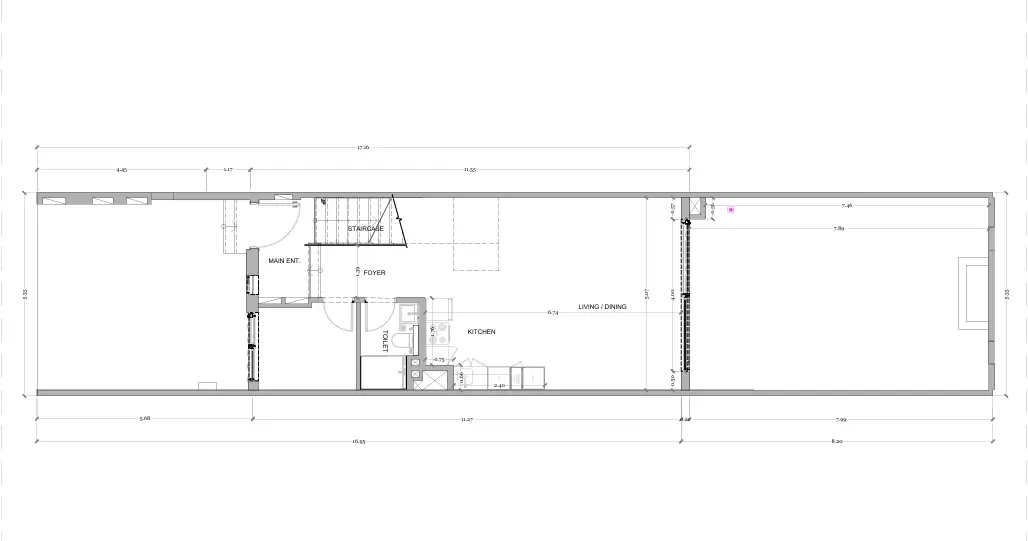
2D Drawings
2D drawings help communicate:
- Room layouts
- Furniture placement
- Dimensions
- Ceiling planning
- Lighting
- Important design relationships
They provide the technical foundation behind the concept.
3D Visualisation
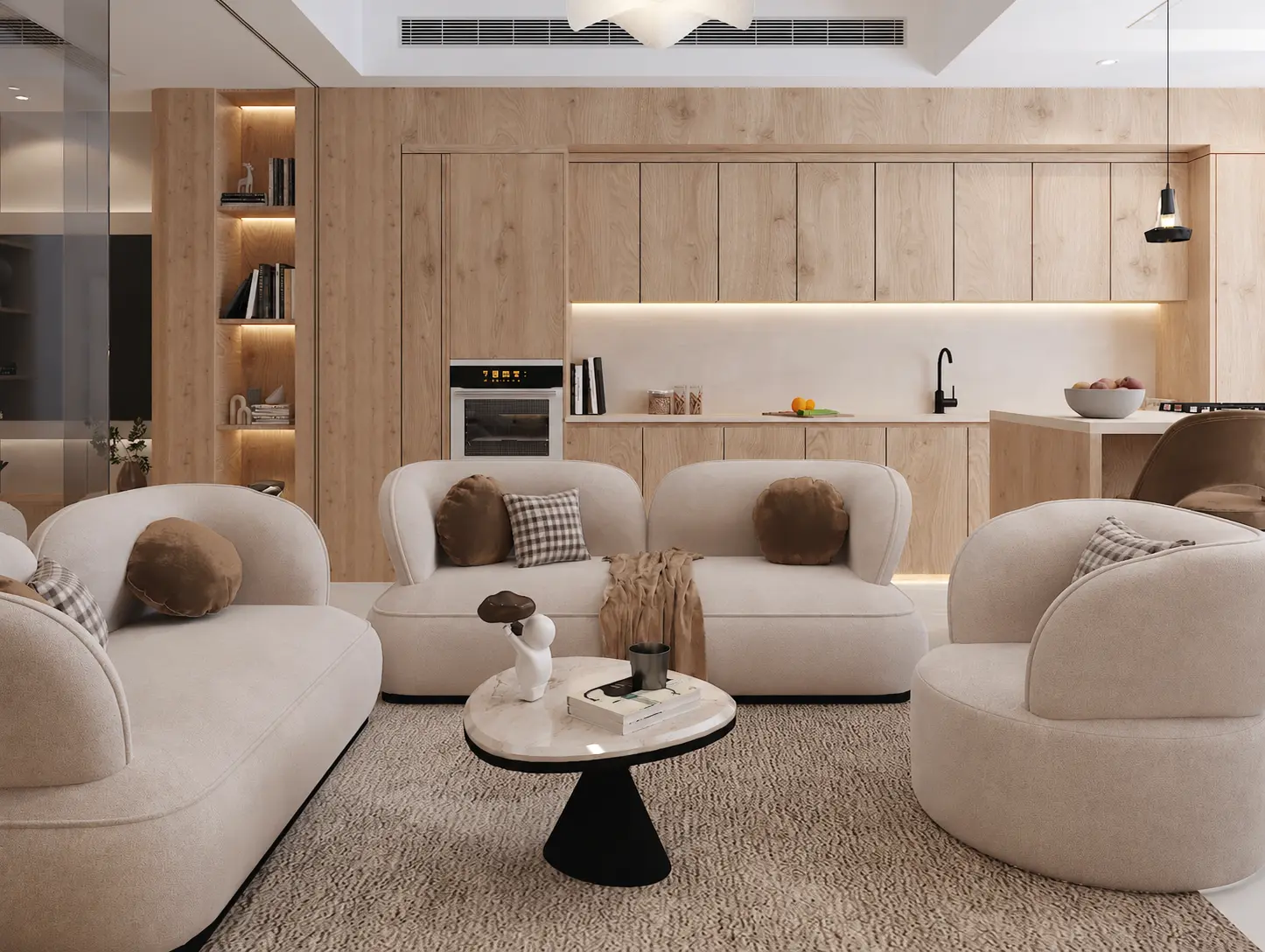
3D visuals allow the client to experience:
- Colours
- Materials
- Furniture
- Lighting
- Proportions
- Design details
- Overall atmosphere
Instead of trying to imagine the final result from separate samples, the client can understand how the different elements will work together.
Why Technical Planning Matters in Interior Design
A strong design process should also follow a clear project structure, similar to the RIBA Plan of Work, which explains how design develops from concept to technical coordination and delivery.
Interior design eventually needs to connect with the physical property.
That means considering elements such as:
- Air-conditioning
- Electrical points
- Lighting
- Ceiling levels
- Joinery
- Doors
- Flooring
- Plumbing
- Material transitions
- Window treatments
A TV wall, for example, may affect power points, data locations, joinery details, lighting, and material installation.
Similarly, a ceiling design can affect lighting, AC outlets, curtains, and the perceived height of the room.
This is why we believe visual design and technical thinking should develop together.
For projects in the UAE, technical planning should also respect relevant requirements such as the Dubai Building Code, especially when interior decisions affect construction details and implementation.
Why X Factor Designs Is Different
At X Factor, we do not begin with decoration.
We begin by understanding:
✅ How you live
✅ How you use the property
✅ How people move through the home
✅ What you need to store
✅ Which pieces matter to you
✅ Which styles you genuinely prefer
✅ How the property itself should influence the design
Then we translate those requirements into one integrated interior concept.
Our approach combines creativity with practical and technical understanding.
That allows us to create interiors that are distinctive without losing comfort, functionality, or long-term relevance.
Interior Design or Turnkey Solutions?
The right service depends on where you are in your project.
If you primarily need:
- A design concept
- Space planning
- 2D drawings
- 3D visualisation
- Material direction
then Interior Design may be the right starting point.
If you want the same team to continue through fit-out, coordination, execution, furnishing, and final handover, you can explore our Turnkey Solutions service.
Start Your Interior Design Journey with X Factor
The right interior should not feel like a copy of someone else’s home.
It should respond to your property, lifestyle, and taste.
Whether your preference is Modern, Contemporary, Classic, Semi-Classic, or a carefully balanced combination, the goal is to create one clear direction that still feels right years later.
With Interior Design for UAE homes, X Factor Designs combines space planning, style, materials, furniture, lighting, 2D drawings, and 3D visualisation into one complete design process.
Have a floor plan and several styles you love?
Send them to us.
Let X Factor Designs help you define the right direction for your home.
Book Your Interior Design Consultation